

Doing Nothing - The Only True Relaxation
Why nobody can relax anymore

Introduction
The world of noise is the modern world. Even when applying the term modern world accurately, the world of noise has been reality for over one hundred years. Extra! extra! read all about it! What’s new and what’s old? What even really matters? It is impossible to tell. We have become Hegel’s dialectical world in the most real and brutal sense, nothing stays and everything goes in a process of constant warfare.

I sit here now, tortured by the silence, I have distracted myself from writing this article for weeks. I have around ten articles like this that every time I think of them as completed products I mourn that they have not yet been written. This one nags at me though because every time I submerge myself in noise the thesis of this article returns to me. How is it possible that my higher conscience knows this so clearly and yet I can’t seem to act on it. Many a great man has said that knowledge without action is no real knowledge at all. This experience, which doubtless all of my readers have at some point had, confirms that to be true. I feel that one must declare war on oneself, on the weaker element of oneself in order to remedy this disconnect. Something so violent is needed to overcome the slave within oneself. Though it is important to note that Nietzsche was not the first, nor will he be the last to talk about such an internal conflict.

Why are eastern European countries so much quieter? Why don’t they love chatter, was it just random or are they more soulful. Perhaps like their beards and their lawns, their mouths have grown unchecked and so they are fearful to cut their tongues on the wetting stone of conversation. I’m quite sure that it is not this at all, rather the east took to heart a lesser known Christian teaching: silence.
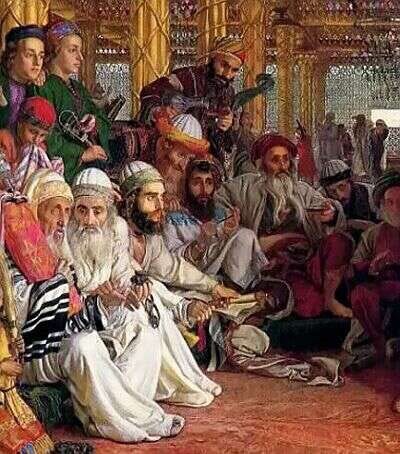
Picture entertainment in the first millennium, do you think of plays, gladiators, public executions or looking at the stars? Most of these were not the primary entertainment for ancient man, rather it was chatter and gossip. Talking with others formed the primary pastime for most people for most of human history. Idle chatter is the primary appearance of essential slop in the history of man.
When Christ came to earth he warned against such things, gossip being a way to make one unthinking and susceptible to demonic suggestion. You might think that sounds odd, but think on a time when you were talking idly, how easy was it to say things you later regretted, tell tall tales, lie and speak ill of others? These weaknesses that chatter exposes us to are the primary evil of chatter.
Entertainment is an opiate, it numbs the mind without solving any of the root issue of the pain. Chatter is a weak sort of drug however, surpassed in exponential orders of magnitude by the means of entertainment and time wasting in twentieth and twenty first centuries. Conversation is not that powerful of a drug, it makes you forget some things for a moment, but no conversation (especially those of low quality) can go on for hours or days. Eventually the participants must return to reality and face the struggle in their lives.
The modern social media is a gossip in the extreme. One can be connected to unlimited pointless conversations with a one hundredth of the effort for a theoretically unlimited amount of time. Only impeded by the requirements of subsistence.
Speaking on subsistence, food was another form of mass entertainment in ancient times. This is why Christ as well as the Old Testament have strict dietary laws. Another practice the east retains much better than the west is fasting.
But what is the point of silence and fasting? Why is this a topic I can’t get over, I have written other articles about this and I think it is the issue of our age. Both silence and fasting force one to interact with reality and live within it. Reality is the domain of the genuine felicity as well as the genuine relaxation.
Let me tell you a story and stop me if this sounds familiar. A man works a difficult nine to five job, he rushes home and makes frozen meal because he doesn’t have time to cook. Then he goes on his computer and starts a video game, hours go by and the man only becomes more and more frustrated. If you asked him why he plays video games or what exactly he thought he was doing he would tell you: relaxing or trying to relax. But then why does he only get more angry the longer he pursues his relaxing medium. The answer is simple, the dissonance between the fake progression of the game and the real issues facing him tears him to shreds.
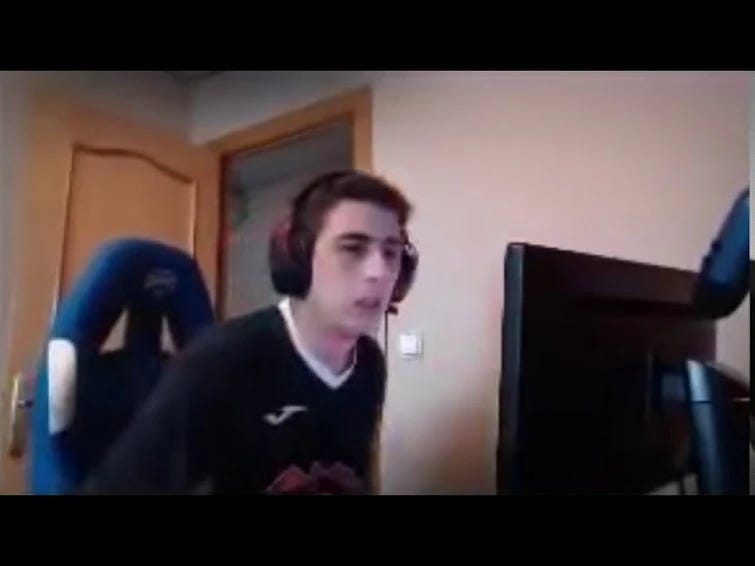
Consider also the young man who scrolls reels for hours when he has deadlines impending, he thinks that he is trying to relax but in reality he slowly becomes more and more anxious. The only thing that will help him relax is alleviating the pressure of his responsibilities.
Here is the power of doing nothing, of being in silence and being undistracted. If one can simply achieve the state of doing nothing, his brain will be greased into action. Having nothing to dwell upon but the reality at hand he will quickly torture himself. This torture is what will drive him to resolve upon a course of action and pursue it. Action itself is difficult but ultimately therapeutic. This is the answer to relaxation for most men.
However, true relaxation only comes when man is in a state of satisfaction, having completed one’s responsibilities then can there be a true unhurried state of mind which produces peace. This is a relaxing feeling which demands no medium, no escape. Why would relaxation need a medium anyways? Simply stopping should be a relaxing process, this is most certainly how it was traditionally viewed. But, as I have already explained, because the modern man is burdened with unresolved issues and fears he only finds relaxation in numbness, despite this being a miss attributing of the genuine sense of relaxation.
The point of this article is to implore all its readers to try more doing nothing and practice less escapism, ideally one does nothing as a habit and pursues the responsibilities that one wishes to undertake after careful contemplation. Those responsibilities whose fulfillment does serve as the foundation of a good and happy life. Quitting escapism one way or the other will always be a good thing. One cannot find the truth if he purposefully runs from reality. Neither can one find a true joy or peace with interacting with reality. That is the most important lesson.

This is a somewhat radical idea however, as almost no one practices what is recommended here save for very few. Older generations were much better at this yet all in some way or the other sought escape in their time. However, I am happy to recommend a radical cure for a radical disease of a radical age, what else could be the answer?
If you do try this, remember that discomfort will quickly beset you if you are unused to doing nothing. Rather than rush to distraction once more, try to identify what actually makes you uneasy at its root and then tackle that. Having done so you will feel relieved. Going from one problem, one responsibility to the next is not something to be feared but rather something to hope for. With each accomplishment one should feel more fulfilled despite becoming more worked and tired perhaps. But even when one is tired, the best rest is not distraction, the best rest is once again to do nothing, or to sleep.
Distraction and escapism are greatly unhealthy for the mind and body, it is best to stay away from these things and think carefully on what is mere superfluous distraction and what is a genuine desire or necessity.
That should cover most of the thoughts I have on this topic, please do try it. If you have any comments or disagreements on this subject feel free to write a comment, I do read and respond to them.
With that said, thanks for reading.
Chuddhathustra recommends counting breaths. MEDITATE NOW.
It's good to avoid gossip, but very little of "chatter" has to be such. Talking and eating with each other is how we form community bonds and enrich our own understanding of each other, and I'm wary of dismissing the importance of these activities: they are two of the most profoundly human things through which we do indeed engage with the important social part of reality.
There's certainly something to be said for silence in pursuit of reflection, or to dial back on all the superfluous inputs life throws at us, perhaps fasting for personal discipline if necessary. But fasting for its own sake as a broad recommendation is something I've found hard to justify.